
What Does “Bridging” Mean in Martial Arts?
Originally posted by Dustin Denson on May 5th, 2026.
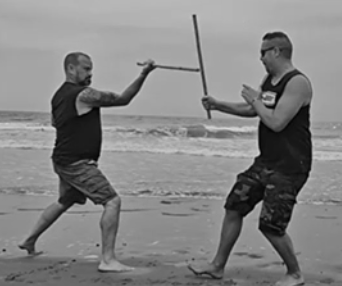
Understanding One of the Most Misused Concepts in Training
In martial arts, the word “bridge” gets used often—but rarely explained clearly. Some treat it like a technical term. Others use it loosely. Most never define it at all. So, what does it actually mean?
Short Answer
Bridging is how you connect to your opponent to create an opportunity to strike, control, or finish.
That connection can happen:
- By moving forward.
- By intercepting.
- By redirecting.
But the goal is always the same: Gain access to the opponent.
Literal vs. Figurative Meaning
The confusion comes from the fact that the word “bridge” is used in two ways – literally and figuratively.
Literal: Physical Contact
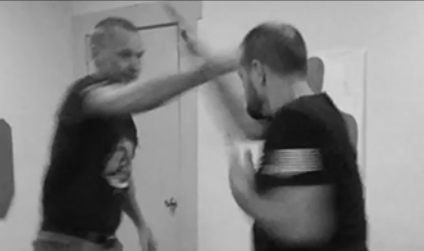
In systems like Wing Chun, a bridge is actual contact:
- Arm-to-arm
- Hand-to-hand
- Clinch or tie-up
Once contact is made, you can:
- Feel pressure
- Control movement
- Create openings
In Pekiti-Tirsia Kali, drills like Segang Labo or drills from Methods 5 and 6 quartering from long- or close-range train this constant contact—this is bridging in its most tangible form.

Figurative: The Entry
More broadly, a bridge is how you get in or, if we consider the image of a bridge, it is a structure for crossing something normally considered not crossable.
It’s the moment you go from:
- Out of range → To in range.
This can happen in different ways:
- Forward pressure – stepping in behind strikes
- Interception – hitting as they attack
- Redirection – deflecting and entering
- Angling – stepping off-line to gain position
A Common Mistake
Bridging is more than just advancing on an opponent to take ground, create an opening, and attack. That’s not wrong, it’s incomplete. It only describes one type of bridging: forward pressure.
In reality, you may not always be able to:
- Move forward.
- Take ground.
- Initiate first.
Sometimes a smarter bridge may be:
- Letting them come to you.
- Meeting them on the way in.
- Redirecting their attack into your entry.
A Better Definition
Bridging is the act of establishing a functional connection with an opponent—by advancing, intercepting, or redirecting—in order to create an opening and access primary targets.
This definition:
- Keeps it practical.
- Covers real scenarios.
- Applies across systems.
This Matters in Training Because…,
If you misunderstand bridging, your training may become limited.
If you only train forward entries:
- You become predictable.
- You struggle against faster opponents.
- You miss opportunities to intercept.
But if you understand bridging fully, you develop:
- Timing.
- Sensitivity.
- Adaptability.
- Control under pressure.
A Simple Way to Teach It
If you’re an instructor, keep it layered:
Beginner:
Bridging is closing distance to hit.
Intermediate:
Bridging is how you connect—forward, on the intercept, or off-line.
Advanced:
Bridging is controlling the moment of contact to create advantage and finish.
Final Thought
A bridge is not just movement. It’s not just contact. It’s the moment of connection that decides everything that follows.
If you can control the bridge, you control the fight.
